Showing posts with label Top 10. Show all posts

Friday, January 1, 2010

For the Records - Best of the Decade


Here they are, in easy to consume reverse chronological list format, my 10 favorite albums of our bygone decade.  Do scroll down into the archives to find individual love letters to each one.


Blonde Redhead - Misery is a Butterfly (2004)


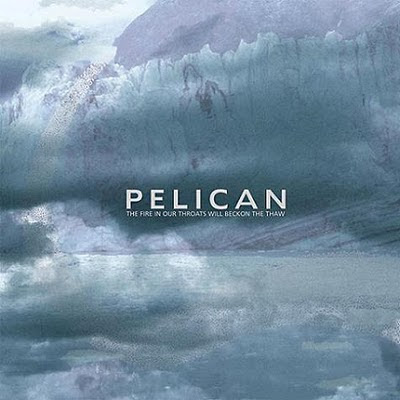
Pelican - The Fire in Our Throats Will Beckon the Thaw


It's hard to find much to relate to in metal music for me anymore.  It turns out that the problem is mostly the vocals.  They're usually screamed in a manner such that lyrics are rendered useless.  One might argue that the vocals are more of an artistic touch meant to convey a feeling or emotion. Well ok, this can be made to work I'll agree but it becomes hard to beleive that this sort of anger can be sustained, in the singer, much less(more importantly) in the minds of listeners over any period of time(teenagers and psychopaths excluded).  Screaming as an instrument does makes sense to me, very few bands though can pull this off.

Take the vocals away though and a few things happen.  The focus is taken off the screamer and instrumentation must carry the song along.  Without a vocalist the traditional song structures seem awkward and vestigial.  With the music of midwestern post-metal group Pelican this emphasis is given to the change of movements and the building of melodies, harmonies, and volume.  The songs swell and break almost organically.  

Unlike say jazz though the effect isn't entirely avant garde.  In the absence of lyrics to hold a theme or narrative, the songs retain a sort of cinematic quality.  Bands like Mogwai or Explosions in the Sky have used this to great effect in actually scoring popular films.  Yet without a proper narrative the compostions have to be interpreted though the scant few impressions given by song title, album title, and album art.

With Pelican's The Fire in Our Throats Will Beckon the Thaw the impressions are grand, naturalsitic, time spanning, and represent fantastic and unstoppable forces of nature.  With this in mind the album can play as various narratives.  To me, it's glaciers slowly carving out continents, it's great squids and white whales and mammals coming aground, it's the volcanic birth of islands and mountains.  Its great and powerful forces of nature playing out thier ruthless and unpeopled stories.  

Consider the difficulty of trying to express such a scope verbally, and you'll find that those who try often end up sounding over the top and goofy, where classical intrumentals have succeeded.  Much like the classics it's not just size of your orchestra, but the grace and complexity with  which you can use it.  Fire in our Throats is Pelican's most melodic and complex composition to date, every bit as nuanced as the albums of thier post-rock bretheren mentioned above.  

Nevermind those metal bands who strive for darkness of the industrial, the tribal, the fuedal, and the sacrelige, Pelican is capable of expressing the greatness and complexity of the natural and the primordial which is far more interesting.  
 

Wednesday, December 30, 2009

TV on the Radio - Desperate Youth, Blood Thirsty Babes


I'm starting to hear talk of this past decade being officially the worst in recent memory.  Of course we spent those 8 years gritting our teeth and losing ground politically,  perhaps an ounce of forsight could have gone a long way, but I suppose people love to be wrong over and over again.  Anywho there's something to be glad about and their name is TV on the Radio.  

It was in these years that TVOTR grew from their humble beginnings, matured, outgrew the indie scene, and flourished in the mainstream.  Their self released OK Calculator was a sprawling mess of weirdness and fun that did little more than establish theri affinity for rigid experimentation and hint toward their talents.  With their Young Liars EP they showed they had grown and deserved their chance at the plate.

With their indie label debut Desperate Youth, Bloodthirsty Babes, they emerged fully formed. It's major force is the beautiful harmony produced by singer Tunde Adebimpe's soulful and self assured poetics, and multi instrumentalist Kyp Malone's falsettos.  It is the unfortunate circumstance of many great bands that they have front man/singer who cant carry a tune or write a lick.  It's TVOTR's fortune that they are not only gifted musicians, artists, poets, technicians, and social commentators, but have commanding voices to boot.  The touching and sincere barbershop ballad Ambulance illustrates best that for all the novelty of their experimental approach, they truly need nothing other than their voices to create captivating music.

What comes through on Desperate Youth is a 60s era idealism tempered by a dose of  90/00's realism.  It's appropriatly hopeful and disappointed in turns, but never defeated.  It's woozy and lovey, and then angry and sarcastic.  It's summing up the century and saying lets move on.  Their name if nothing else roots their interests in the lessons of the 20th century while transcending them.  

It's this same idea which they expand upon with Return to Cookie Mountain, and Dear Science.  Looking at the world with that same disappointment and stubborn optimism, and over the past decade gaining the hearts of countless fans and the accolades of some the nations most well known and revered critics and publications.

In my opinion they've been making the same album ever since Desperate Youth(2004), honing thier craft in the process and utilizing their new found resources and friends.   It was Desperate Youth though that was their siren call, their mission statement, the prototype for their celebrated major label albums.  While each new album has pulled me in held me there, I'm still most in love with those first songs that were so perfect and different and right already. 

As the best of the decade lists roll I'm surprised and disappointed that I haven't seen them all over the place.  They deserve a better tribute than I have done or could do here.


Monday, December 21, 2009

Pedro the Lion - Control


It always baffles me to find out that a band or song writer I love is religious. It's not that I'm in awe that the same genius I recognize in them could believe in something I can no longer bring myself to humor, but more that such opposing views on what seems like such a basic and important question could find a complete reconciliation in my appreciation of their art.

Perhaps it's David Bazan's belief in the other side which keeps him afloat when uttering the simply soul crushing truths he's capable of in Control. Perhaps it's a religious beleif which draws him to such dire topics, or perhaps its the topics that drive him to religion. In any case there are no easy answers, no religious platitudes, no "good news", just people being all to human in an all too modern world.

The plight of man in the age of information and technology is a pet theme for Bazan. Is technology going to make us better people, a better country, will it even make us happier? With Control, Bazan expounds upon the themes of its predecesor EP Progress. Borrowing it's icy April 6, 2039 and renaming it Progress, he reworks it with an auto-tuned voice transmitted from the future selling furniture or perhaps just a prideful consumer showing off. It's hard to tell. The track drives the point home with "if you're lucky they'll turn out as good as you/you tell them that they're good kids but you know it isnt true/your father drank a little, you're on liver number two",drawing to mind that old quote which goes something like "I have no problem with technologies getting better and smarter, my only fear is that we will meet them half way". To make the point even clearer, the EP puts the barcode front and center of a steel grey cover.

In the bleak world of Control live a married couple who deal with the disillusion of their marriage in destructive and "Unoriginal" ways. Going from feigned "I love you's" at its start and ending with a EMT's feigned "buddy just calm down, you'll be just fine". An epilogue offers no answers, but won't admit meaninglessness, instead offering in a sober tone "wouldn't it be so wonderful/if everything was meaningless/but everything is so meaningful/and most everything turns to shit.", then in his characteristic irony sings "Rejoice" over a bed of angelic guitars.

Bazan has ever been a master of the cautionary tale, Control following in the narrative footsteps of the previous Winners Never Quit, another story of flawed individuals trying to deal with situations far over thier emotionaly immature heads. And, like many-a-band who try their hand at the concept album, came up with something more engaging the second time around.

Another important album from more overt Christians is mewithoutYou's Catch for Us the Foxes. These believers take an entirely different approach from Bazan, but still come up with something beautiful and meaningful. The music is vibrant and emotional owing much to 90s bands the likes of Fugazi and Sunny Day Real Estate. But, the lyrics are are what truly stand out. Feeling more orated than sung, they move along in a way that combines the immediacy of evangelism with the awe and wonder of transcendenatalist poetry.

If this sounds a bit paradoxical, it works all the better for thier themes which focus mainly on a sort of man vs himself struggle to keep the faith, recognize the truth, and maintain innocence. Aaron Weiss the bands vocalist carries the sort of neurotic energy of a Dostoyevski anti-hero, epitomising with his all to forward approach the unreliable narrator. But, if you can take his faith and joy at face value, then you will open yourself to some the best poetry and freshest imagery of the past decade.

Wednesday, December 16, 2009

Battles - Mirrored


Remember when you were a kid and for the first time you went to Six flags, Disney Land, Universal Studios, or what have you. For the next few days you couldn't stop talking about HOW COOL it was, gushing about how it felt to be whipped around by a big metal contraption until you lose your shit and your adrenaline takes over. The ride stops and you step off grinning like an idiot.

Fun is the word, Battles Mirrored(2007) is fun, its a thrill, its an effect. Its 4 men in room with a few tons of electronics, mad scientists hammering away at this wondrous contraption, a sonic playground for your head. It's a century old promise finally fulfilled, a complete symbiosis of rock and electronics. Its pure bliss.

None of the lyrics are readily understood, and none need be, there's no narrative to tell, no emotion to convey, just a spectacle to behold. It's as close to avant-garde as anything I've ever heard. It's also Battles' first full length album.

It does owe a particular debt to the math rock tradition with its emphasis on angular melodies, electronic loops, odd time signatures, and lyrical ambiguity. Most importantly to math rock veterans Don Caballero.

In a move similar to the break of At the Drive In and the rise of the Mars Volta. Guitarist Ian Williams broke with Don Cab in 2000, and by taking on a more aggresively progressive and expiremental sound with Battles won wider appeal. The only album in the math rock catagory coming close to its sheer musical integrity is Don Cab's 2006 release World Class Listening Problem, that in a decade full to the brim with great math releases.

Mirrored's greatest success and largest leap from the genre is its grasp of the electronic. Keyboards are used to great effect, guitars processed, tweeked, and tapped to produce intresting new tones, and vocals bent to absurd and comic pitches. When going at 150 beats per minute its complete sensory overload, theres so much you've missed, you've no choice but to get back on and ride again. Conscious of this, mirrored is bookended. The albums opening and closing tracks Race In and Race Out respectively welcome you to show, and make a curtain call. A thoughtful and clever touch.

Saturday, December 12, 2009

Mountain Goats - Get Lonely


I remember once hearing that the experience of loneliness makes everything around you seem sharper, more vivid, a sentiment I have to agree with.  And, no album I've heard captures this feeling like Mountain Goats  2006 masterpiece Get Lonely. 

The restlessness, the freedom, the desperation, the hunger of loneliness is in the albums every aspect.  The production is crisp and dry, the guitar played softer than one would expect form from singer songwriter John Darnielle, the backing instrumentation slow and spare except when used to signal the narrators claustrophobia and paranoia, to capture the transient joy of a painful recollection, or to express a sort of forced, by your boot straps, type of motivation he only half believes in.  The album FEELS lonely which may be the majority of its magic. But, the lyrics, oh man, the lyrics.

No one is around. Only traces of people.  Faint screams from a high school football game, the noise of traffic, flood lights, convenient stores, dream people, anonymous crowds, ghosts of memories, strangers, threatening villagers, and most importantly, not the woman who has left him to his own devices.

"Sorrow is nothing but worn out joy"...the titular wisdom of the 2006 film Old Joy...which ive just watched.  This is a particularly accurate sentiment for Get Lonely's narrator who spends half the album inhabiting the home they made, every detail aching with her absense. " The first time I made coffee for just myself, i made to much off it/but i drank it all just cuz you hate it when I let things go to waste/and i wandered around the house like a little boy lost at the mall/ and an astronaut could have seen the hunger in my eyes from space".  He tries to escape into the world and find something to connect with "i will find and a crowd/ and blend in for a minute/and i will try to find/ a little comfort in it" but  he only looks for her face in the crowd.  He tries to clean house "whole boxes of memories left out at the curb/what are the years we gave eachother/ ever gonna be worth".  Even his dreams give him fresh glimpses of the past to pine over.  There is no escape, the pain in the joy, the joy in the pain.

The album creates a frosty landscape, vivid, unmistakably real and present.  The imagery is cold and dry.  One can almost see Darnielle's icy breath coming through the tracks.  When the albums final track In Corolla comes around with the narrators metaphorical or perhaps actual sinking down into the warm comfort of a brackish lagoon and bringing the water into his lungs, it's a bitter sweet moment.  "The sun was sinking into the atlantic/the last time that i turned my back on you/I tried to summon up a little prayer as i went under/it was the best that I could do/and i said Let them all fair better than your servant/the reeds all pricking at my skin/heres hoping they have better luck than I did down here with them/all that water rushing in."

 Its also been suggested that in the lonlier periods of your life that music becomes more important.  Perhaps its a needed distraction.  Perhaps in more shapeless times one looks for signs of ones self, bits of wisdom, answers to questions that emerge only as feelings or hunches.  Ones eyes are opened wide taking everything in, nothing is certain, everything is at once more threatening and potentially liberating. Discovering a new album, a new band, one can relate to in many ways can be like finding a new friend, slowly you learn more about them, it can be disappointing or it can reaffirm the bond.  I've recently learned about one of his albums The Sunset Tree and I'm eager to put my brain's ear back into Darnielle and Co.'s capable hands.

Thursday, November 19, 2009

Deftones - White Pony


It was a good year to be into hard-rock and heavy metal. A young man mad at the world was hardly want of charismatic facial haired crooners capable of articulating his all too common frustrations and desires.  I rang in the decade with a lot of aggressive music. Bands like Tool, System of a Down, and Rage Against the Machine were at the top of my playlist, not to mention a few other less flattering choices that force me to cringe in hindsight. 

But, as the years have passed many of these albums have lost their edge. Or to put it better, I've lost whatever energy I was putting back into them. I can listen to them today and enjoy a rush of nostalgia, but there's no mystery left to tease out of them. The same music that once described my existance and punctuated my dreams, heard now seems strange and awkward. The music has stayed the same. It's me thats changed.

And it keeps happening. This isnt to say I'm an entirely different dude. I still enjoy much of the same music I did 10 years ago. What's even more suprising is that some of those same bands are still releasing music I like to this day, not many but if say Cake, Fiona Apple, or Ben Folds put out an album tomorrow, I would waste no time getting online and stealing it first chance I got.

The Deftones 2000 album White Pony was a big deal for me. I was a huge fan of their previous release Around the Fur with its irresistibly beautiful teenage anthem "Be Quiet and Drive". The ablum is pure emotion. It's all smoke and dreams and estrogen and shameless desire. It sighed and throbbed and screamed and captured my imagination big time. I wanted to play music just like that.

I jumped into White Pony head first as fans are known to do with follow up albums, with every faith it would be the next big thing in my life.   And, as is not so often the case, it was. The first month or so of the albums release saw a different album than what you will find on the shelves now. In a marketing move by the bands label the radio/music video hit "Back To School" was grafted onto the beginning of the album. Sure its just one song, but in such important real-estate and in such discordance with the rest of the album. Imagine renting Princess Mononoke only to find that Disney's replaced the first 10 minutes with a Pixar short. If you have to listen to this version just skip past track one and hear the album as the band intended.

White Pony marks a few key contrasts to thier previous work. Most importantly it feels more focused. The production value for one is ratcheted up. The drums are crisp and clear, an improvement drummer Abe Cunningham makes obvious advantage of, creating beats which are more nuanced and inventive than previous efforts. On several tracks including "Rx Queen" and "Digital Bath" the verses are reduced to little more than drums and vocals creating a Portishead like sound and arriving at trip-hop from a completely different starting point.

Like portishead Chino Moreno carries his voice, not like a growling cookie cutter cookie monster, but with the smoky diva surliness of a Bjork or Billie Holiday. Where as in previous efforts recording Chino seems more like documenting a strange natural phenomenon, here his throaty androgenous voice is fully at his command. Mix that with the lyrical content which has shifted from that of an emotional impressionist toward tighter more narrative driven structures. In the process the deftones lost very little emotional immediacy and gained a great deal in control and craft.

Rythmicly guitarist Stephen Carpenter and bassist Chi Cheng become less riff driven. Instead the guitars create an ocean of sound which baths the album in warm tones. The result is a rich and dreamy bed of sound which makes the drums and vocals really pop.

Most Importantly though, as always, the deftones have created a work of real emotion which defies easy interpretation. After 10 years I am very much still in love with the album. Because a couple songs enjoyed favorible radio play and the very dated "back to school" was such a hit, the Deftones are inneveitably associated with the nu-metal and rap-rock ilk of their time, descriptors that most have been conditioned to avoid like the plague.  Aside from living this awkward outsider existance among rock fans, the album is an odd duck among their own oeuvre, the band electing after White Pony, to revert in many ways back to its earlier sound. After having followed them to such heights I couldn't go back.

Wednesday, October 7, 2009

Grizzly Bear - Yellow House


I brought Grizzly Bear's Yellow house home from the library after a particualrly dreary day at work, layed my head back agaist the couch cushion, and prepared to give it a first listen.  I had stumbled upon a video of them performing a cover of the old Crystals doo-wop hit "he hit me (and it felt like a kiss)" and subsequntly a couple a cappella tracks a la the brilliant french video series "Blogotheque" aka "The Take Away Shows".   Duly impressed, I decided to give the full length a try.

Lying there in the semi-dark, I let the flighty a cappella swoons wash over me. Slowly and softly the ghostly vocals and dreamy instrumentation seeped in, and I was able to forget for some significant bit of time that I was lying there in the dark defeated by a shitty day at work.

I suppose that escapism was a feeling I hadn't felt in some time, and I was thankful to GB for weaving this dreamscape so that I might loose myself in it like  a dorthy being pulled up and away from a black and white Kansas below.  Later, nearing the release of thier follow-up  Veckatamist, I read an article which sited one of them stating that they hoped someone might listen to one of their albums and be able to forget where they were.  This, from a band who is particularly cafeful about stepping on the toes of interpreters with mission/artistic statements.  Needless to say I was all the more impressed.

What makes Yellow House so exceptional is how it's found a way to seem both timeless and progressive.  The way it seems to be invoking some lost art by incorporating traditional folk instruments and instrumentations into impossibly expansive layers, sometimes building to angelic crescendo, other times breaking out into a stomping and driving rhythmic force. 

 At times it feels as if you recognise their harmonies from the soundtrack of some golden era epic the titles softly disolving as the camera pans across a forgotten american landscape.  A tall and simple church stands out boldy agaist the prairie, wandering through its halls, the echo of the choir envelopes you in an unsettling hymn for the missing.

The Knife,  a song which has emmerged as the albums siren call, seems completely at home among the remainder of the album. Dispite its catchy motown aesthetic, it depicts a dark dirge of a story about a girl who just can't see her boy(the narrator) is a liar.  Many of the songs bear the impression of being perhaps in that yellow house where the album was recorded: kicking up dust into the sun coming through the curtains, going to the window looking out at big blue sky,  lyrics floating by like clouds, where you might impose some familiar form on them or just let them float in enriching the scene as a whole.

Like many of my favorite albums, its a carefully crafted experience.  The band has an hour or so to tour you around and show you what they've found, and in Yellow House Grizzly Bear has collected some wonderful things.

Tuesday, September 1, 2009

Blonde Redhead - Misery is a Butterfly


In the last post I alluded to "comfort music" and I cant imagine that term needs much more explanation. Like a warm blanket you can wrap yourself up in it and let it coo you to sleep. I'd say that we're living in a generation defined by the idea, but it seems pointless to pick on emo when as long as music has been around we've been pouring our frustrations into it.

The only difference Is that as the entry level age for society endorsed romance drops you don't have to be an old blues-man to howl away the tears and testosterone. Self-pity has always been around in music. The idea that because of an explosion in technology is lowering the bar for the theatrical moping and catchy histrionics we should lay the bill at the door of self-pity and shoe-gazing is a little off aim.

The unspoken rule is that as adults were expect to leave all this comfort music behind and start taking a more positive pro active look at what were listening to. I think one of the unique burdens/choices that recent generations have had to deal with within a culture of constant noise is to consider what they idly end up ingesting and just how it effects their decision making processes. Each generation is expected to be able to dissect manipulation at a younger and younger age. Its little wonder why we look back at what we were doing just years ago with a tall order of condiscension and nostalgia.

Without straying further into rant territory, i'll get back on the point which is that as time wears on the wheat is separated from the chaff and what makes real artistic progress makes the trip to new generations like a little box of love letters we couldn't possibly throw away while lazy and unoriginal emoting gets left in the rear-view looking like Boy George's hat. No finer example than the recent success and influence of the Beach Boys Pet Sounds album-- essentially an emo album-- embraced on all sides.

The cruel hand of reason is unforgiving. I'm sort of afraid to say too much about Misery, or even find out what I really think about it taken apart and looked at under glass. The reason is that I still rely on this album as comfort music. It has a very pragmatic use, regardless of whatever intrinsic musical or cultural value it possesses. The conventional wisdom is that any album worth its salt would survive and be enhanced by such a dissection, still I cringe at the thought of touching this butterfly for fear that I ruin its beautiful wings.

This albums strain may be of a particular genus within comfort albums: "break-up albums". Singing duties for each track are traded off by lead vocalist Kazu Makino and multi-instrumentalist Amedeo Pace(half of "the twins" BR's identical twin brothers). The affect is as if the two were writing dear john letters back and forth. The musical ground they lay for this modern opera is a dense tapestry of synth and strings that fuse art-rock, pop, and classical chamber music pushing the despair to brand new/very old heights.

You might remember the scene in Bill and Ted where Mozart having been brought to the present chances upon a modern keyboard at the mall and proceeds to melt everyone's faces Victorian style. Given enough time he may have produced something close to Misery's baroque aesthetic.

Its hard to say much about the albums content that can't be felt. Makino's accent makes Bjork seem Middle-American by comparison and every song is as desperate as Vespertine's "Pagan Poetry". Pace's tone is equally hopeless. Together they capture the frustration of the too-needy-to-go...to self-absorbed-to-stay pain of a relationship gone sour.

This alternating of tracks eventually culminates into a frustrated and lonely 6 minute duet. Then with the opening chords of the albums last song "Equus" its as if the dark sky opens and beam of light falls upon the one or two trees which survived the fire. The song compares its narrator to a horse rider and her companion to a horse, and finds its inspiration in part from an accident involving Makino being seriously injured after being trampled by a horse. The production is a bright piece of pop which couldn't possibly serve as a happy ending, but makes sure to end the album at least ambiguously.

In lieu of actually studying the album any further:
Here's a list of 10 other great comfort/break up albums to sink down into:

The Cure - Blood Flowers
Fionna Apple - When the Pawn
Metal Hearts - Socialize
Cursive - Domestica
Elliot Smith - XO
Damein Rice - 9
Circa Survive - Juturna
Veda - The Weight of an Empty Room
Sunny Day Real Estate -Diary
Portishead -Dummy

Of course preference will change from person, what is one man's sympathetic masterpiece is another's whiny cringe machine.

There's always a rock musician who knows your pain. Give up. Tune in. Lay down. And let the man with the guitar and the woman with the microphone make it all better.

Wednesday, August 26, 2009

Dismemberment Plan - Change


If De-loused is shrouded in obscurity, mystery, and mythology, then Dismemberment Plan's 2001 Album Change is at the other end of the poetic spectrum. The defining feel of the album for me is one of clarity.

The albums cover suggests it's nature pretty succinctly. We have the idea of change in the lower left, framed by a vast blue sky which leaves room any number of possiblities. It hints at what the lyrics make plain, it is time for airing our some demons, cleaning out the closets, and getting rid of some baggage. It makes for great road music.

The tone of the album is a two part mix that works perfectly to capture the feeling of starting afresh. The past is all there in all its mire and angst, you wouldnt know it at first but you're in for a lyrically dark album, singer Travis Morrison puts all the weird shit on his mind right there onto the track, and he does it with great poetic skill. It sounds like something out of Dave Eggars , its dark and heavy, buts its just quirky and fresh enough not to embarass itself too much with melodrama. Which brings me to the second part of the trick which is the rest of D Plan's musically optimistic tone. There's so much energy there musicly that you're convinced that the narrator is going to make it out alive and all the better for having confronted his demons. I use "narrator" because as tangible and many of the songs feel they are mostly fiction or at least offered from a perspective other than the singer's.

The album starts out with a sort of introduction: Theres no heaven and there's no hell/no limbo inbetween/i think its all a lie/ just a white light out to velvet black/then back to neutral grey/thats all when we die. It then comes back to say don't be fooled by my realistic take on the afterlife, I'm actaully fairly sentimental, "but you can bet I'll keep it real."

Starting with the second song The Face of The Earth we get a couple doses of brilliant little every-day vignettes which use what seem like insignificant details to capture the core feeling of each event: as kisses go it wasn't anything out of the ordinary/the alkaline lips/ her fingers hooked around by belt/she had to go/ she took a step back in and then she started to smile/ a heard a funny sound/ and everything seemed to shift.

The albums 4th track Pay for the Piano is a call to arms in the vein of Ted Leo's Shake the Sheets, another album that nearly made the list. And, while I have a chance I want to pay tribute to a couple others you wont be seeing. First Maratime's We the Vehicles which features D plan alumnus Eric Axelson which plays to me like a Change-lite. It's beautful, clean, and focused but missing the raw fire that puts Change over the top. Also, Mountain Goats Babylon Springs EP, puts off a similar vibe. But, well be seeing more of them soon.

Starting with the 5th track we get three songs of hard-core self-searching and bitter depression, sort of the existential core of the album. This trifecta by turns bring out some of the best emoting the album has to offer, best exemplified by the explosive Secret Curse which ticks like a time-bomb through the verses: secret curse/unwashable stain/ugly when bold/boring when plain/stricken with pleasure and taken with pain/ I'm nervous and lost and I cannot refrain, and then completely freaks out and fluxes as Morrison howls "IM SORRY!" over the chorus.

Next up Following Through rolls around and the spell is broken. The narrator cuts his losses and moves on with a statement of autonomy and freedom. Then comes the albums 2 song hit parade Time Bomb and Other Side.

Time Bomb is what got me into the album in the first place. The hooky verse, easy emotion, and focused narrative are the most accessible minutes of the album. I kept going back to D Plan's(or simply "The Plan" as many fans prefer to call them) web page to listen to the mp3 on repeat, to hear it build and get bigger every 30 seconds and let the self-pity wash over me like a thousand comforting hands.

Man am I a sucker for some self-pitying. Bright Eyes I'm Wide Awake It's Morning, was another front runner for this list , and his side project Deciperacidos too. This isn't to say I'll be leaving the exquisite pleasures of comfort music off the list entirely, its just too rewarding to sink your sadness down into a bath of lush violins and minor guitar chords. I dont think I'll ever get over it.

The Otherside is a much more sofisticated attempt which basicly makes the statement that yes, relationships with people can be hard work and we are going to hate eachother some of the time, we're going to doubt eachother, and be confused about what exactly it was we wanted in the first place. But, if we can keep from copping out we might be redeamed and reaffirmed just around the corner. You get the feeling that the otherside is the albums central statement or lesson learned. The music is tight and fast every bit as sofisticated as the lyrics. It reenforces the albums feel of accountability and honesty. Good luck finding a handful of albums in the history of rock music that can do this with any sort of success, or for that matter even try.

The album ends with the bouncy Ellen and Ben the story of a doomed relationship as told by an embittered witness. It gives a sense of being above and beyond and past and condescending that makes a great sort of bookend.

Don't expect a song by song for any of the remaining posts.

St. Louis locals So Many Dynamos have been trying for years to get the word out about The Plan and this was my introduction. I still feel like I'm in on some great secret that few people really know about. I just as easily could have never found this album which is what makes the experience all the more enamouring . You might have noticed I've given very little past or future in which to place the album, and thats basicly how I view it; just a great peice of humanity that needs little context in order to be appreciated.

Wednesday, August 19, 2009

The Mars Volta - De-loused in the Comatorium


So to begin the list, which is layed out in no particular order of importance, I want to start with The Mars Volta's 2003 full length debut De-loused in the the Comatorium.

First I'm going to attempt to save this damsel in distress from the bitter claws of the too-self-conscious breed of indie music reviewers, then I want to get on to some real cannonizing.

Critics of the Album site a few key aversions:

1. The ablum has zero filter for modesty or scale.

2. The lyrics are self-gratifying gibberish.

3. Toooo jammy...please play the 5 chords i know!

I want to point out that the first 2 statements are the albums strengths and are mistaken as its weaknesses, and that the third, if you give the album any sort of honest listen, is just lazy.

I'll be the first person to admit that after having listened to this album at least 100 times I have very little idea what the proported "story" is actaully about, nor does it matter. If you want to judge it on those terms thats fine but your missing the point. Better to look at Deloused as a work of inspired surrealism.

The album fades in with an angular back and forth guitar time-keeper which mimes the sound of sirens while washes of synth and guitar swells fade in and out like electric medical equipment. The first set of lyrics paint a pessimistic picture of a hospital ward and the frustration builds in staccoto guitar and drum blasts until the album begins proper with the forlorn narrator screaming: Now I'm Lost! as the music erupts around him like satan's own salsa freak-out turned up to a hellish 150 BPM.

It's safe to say I was irrevoacably taken at this point. Everything that Cedric Bixler and Omar Lopez were doing right with At-the-drive-in's Relationship of Command they were now furthering with De-loused. Relationship's raw poetics, fierce urgency, and brazen experimentalism were all present with an injection of latin rhythm and operatic vocals.

ATDI's main reason for dissolving was that the afore meantioned beleived that thier trademark brand of post-punk just wasn't giving enough reign to thier predoliction for artisic expansion. And so, ATDI dissolved forming The Mars Volta, but also Sparta, who did a fine job of keeping up the ghost of many of ATDI's best qualities for about an album and a half.

If you take The Mars Volta's narrative bait, which isn't really necessary to enjoy the album, our narrator is a man trapped in his own head. Much like the protagonist in The Diving Bell and the Butterfly but without the hopefull tone. He is a man stuck in dreams, a place where emotions take free reign, and connections between dispareate elements are barely traceable but often rewarding. In this context ,you might begin to get a picture of how I digest this album and why I keep going back to it.

And, cinema is really where the best comparisons lie. For me, one of the closest comparisons is Fellini's Satyricon. As Fellini's camera pans past, deformed figures stare with a mixture of fear, confusion, disgust, or apathy framed by a crumbling and cascading architecture. Voices fade in and out confessing thier dark desires. Ancient mythology is vulgarly evoked. The effect is unsettling. As viewer I'm left with memorable images that have definate, yet understated connections, like waking dreams. The Volta could likely be better appreciated in comparison to other Latin-American surrealists, yet I lack the experience to conjure up anything more than a few Garcia-Marquez shorts and Frida Kahlu paintings.

But back to the point, TMV like surrealist cinema treat their albums as high art. One example of this comes in the form of another Volta trait that critics can't stomach and that's the large expanses of quiet electonics and down tempos which frame thier frantic episodes. In the art world you might call this "negative space" a concept which is used to enrich a compostion by bringing aspects to the forefront. With deloused TMVs use of negative space is very obvious. What many critics denounce as gratuitous noodling, is to me a perfectly paced and lushly produced frame for their explosions of imagery.

De-loused ...Produced by Rick Rubin


Rubin's Vase. (coincidence?)


Lopez' guitar is capable of carrying the melody of any song on deloused and does on a few occasions, yet when its not, and hes teaming up with drummer John Theodore to create a song's rhythmic soundscape the effect is tight and hermetic. While Lopez is highly capable of noodling around he is kind enough to save it for the live show and his solo project.

Most of the highest points on De-loused, an album filled with otherworldly "moments", though are when the rhythmic engine churns while Bixler provides the self-assured melodies. His voice and range are capable of feats which few men can boast.. His melodies feel at the same time ancient and futuristic, and they project the lyrics with confidence that suggests they are somewhere inscribed in granite. His lyrics are full of creative juxtaposions, what he leaves behind in consistancy he more than makes up for in shear freshness of image. Yet an emotional strain of confusion, forlorness, and uncertainty rings throughout De-loused, which really pulls it together thematically and makes for an equally exultant and cathartic listen.

It's not meant to be easy to intellectualize a Mars Volta album. I'm tempted to say that some of the "inspirations" they offer like finding a lost diary or an old quija board seem more like interesting bait for concept junkies like myself, which may never flesh out a narrative, but perhaps provide some sort of intellectual framework for those who need a conveniant mode of peristalsis. Other times they seem like an elaborate joke played by the gods on our tiny little hob-goblin minds.

If this Interpretation of the album is true, and it seems pretty legit, it makes classic-rock geek gods RUSH look like Andrew W.K. on a particularly lazy day.


In my estimation Bixler and Lopez have made 6 great albums, everything from ATDI's In-Casino-Out on up to TMV's Amputecture. They took a necessary leap after Relationship of Command(an album which would likly be on this list were it not overshadowed by De-loused)...and made a work of art which exceeds the camp of their moniker and gives the over used modifiers "mind-bending" or "epic" a comfortable place to hang out and be sincere.


PS.

Today I listened to the album again focusing on the lyrics with a little help from LyricWiki.org and the albums own Wiki page (which has a link to a story book which came with a special edition release) in order to make some sort of sense of the story.

Starting with the basic premis which is: Friend of the band Julio Venegas(mexican surrealist painter) overdoses on rat poison, falls into a coma, and does battle with his subconcious, only to wake up from the coma a week later and jump off an overpass into traffic a la Kafka's The Judgement.

The lyrics are uber-opaque, but I was able to get a sense of the arc of the story which is so well layed out in the above interpretation that I've decided not to do my own inferior version.

If you already love the album then I hope I've done it some justice. If you don't already love it, then that means you've never heard it. In which case, get the album, kick everyone out of the house, get in your socks on the linoleum, put the good china in the cabinet, and get your air drumsticks ready, I'll see you in a week.


Tuesday, August 11, 2009

For the Records


Over the course of the coming months I'm going to take it upon myself to write lengthy reviews/love letters to ten albums.  These albums will have been released at any time over the past ten years and will have captured my ear and my heart in some great big ugly way.  Indeed this is my top 10 of the 2000s list.

 Expect more enthusiasm and less academia.
  

You've probably already heard them all at least once anyhow, but its safe to say I've heard them all at least 30 times perhaps  more.  These were the years I truly fell in love with "the album" as the indisputable vessel/form of musical expression.  I remember precious few song names from many of these albums, yet merely the utterance of the albums moniker will likely convey within me a complex stream of emotions and memories.  This is the sort of poetic that I'm hoping to capture. And to help me capture it, I'm going to attempt to immerse myself into each of them for a good week or so till I'm filthy with their scent.

See you in a week or so.