Friday, February 26, 2010

Hukkle


I've been reading a lot of critics lists recently and feeling abit overwhelmed. I've spent much of the past ten years taking in foriegn films. I'd be confident in saying it's nearly half of what I've watched which is no small sum. Come to find out, according to most international critics, I've somehow missed nearly all the best foreign films of the decade. I've more or less decided to try and become aquainted with much of what I've missed, which include the entire careers of a girl named Claire Denis and a guy named Apichatpong Weerasethakul, by many critics measure the best it had to offer. The first of these favorited flicks I've been able to find is a beautiful Hungarian thing called Hukkle.

With an extremely slight narrative and hardly a word of dialogue, Hukkle comes off as more a poem than a drama. The filming takes place in a small hungarian farming town, and captures in many ways the sublime banality of its inhabitants and the local wild-life. The camera wanders from scene to scene through odd and suprising little vignettes, visual analogies, and unimportant coincidences. The closest comparison that comes to mind is Harmony Korine's Gummo. Both take a similar approach employing local non-professionals to go through familiar ritual as the camera catches as best in can its own unique perspective. In Gummo the community seems to be decaying, there seems to be something sinister in each dying tree. It's a distinctly American poem.

Hukkle on the other hand takes place in a far quianter setting. The little village seems as if it's been there for a thousand years and will stand a thousand more. Everything seems healthy and utopian in a way that only little european towns can. Except people are dying unnaturally. A(the) local police officer is trying hard to figure it out, but is left just as baffled and we are. Those few sentences pretty much make up the "plot" of the film.

Resting upon this slender frame are poetic moments of death and rebirth somehow given both the reverence of a nature documentary and sly elements of comedy. A cat which seems to be rolling about playfully in the grass is actually dying in fits. A pig with comically large testicles is walked across town to be bred with a sow, the owners looking on together fondly. A frog sneaking up on a creek side investigation is suddenly devoured by a catfish. And throughout it all an old man seems to have an extreme case of the hiccups.

You may follow along with the cop, the films only intellectual element, trying to solve the mystery at hand but the film doesn't cater to this impulse over any other. It's a relief to be offered such engaging audio/visual poems, and not be overburdened with the facts and the circumstances, or with one character's particular emotional point of view. The film knows how generous its being. In one interlude we observe an older woman watching a soap opera. The sounds of the program off camera fill the small room with melodramatic dialogue and a cheesy score. Your happy to be enjoying a film that leaves room for your own experiences and doesn't attempt to cheapen your emotions. In this way, it comes and goes with less form and ego having, like good poetry, said something less direct but more meaningful.

Tuesday, January 12, 2010

No abortions for sluts.

There has been a bit of confusion out there as to whether or not fetuses are really people. Some people think that they don't have souls and so are more like a dog or a vacuum cleaner. Others think that maybe a fetus can be put to work, especially if it has children of its own.
I've put together a few facts that should finally clear things up.

This is a fetus at 18 weeks. As you can see, it has fingers, toes, ears, and skin. Looks very much like it could be a human.

At 22 weeks already we begin to see changes. Our fetus, who likes to be referred to as Arnie, has made some startling advances. The onset of pubic hair and a newfound curiosity in the opposite sex mark this delicate stage.

By week 25 more great milestones. The fetus must now learn to start taking responsibility and think about where it's going to be in another week or so. A pivotal time to be sure.

By week 28 the fetus really begins to express its individuality. Staking out its identity, the fetus begins to rebel against the provinciality of the womb, and longs to be free of all feeding sacs and amniotic fluids.
Coming into week thirty the fetus has likely been to Europe or the far east at least once. This new stage in his development marks a more open minded attitude. The fetus is likely to experiment with drugs and alcohol, and is often marked by many other factors including growing out a beard to try it out, a discreet tribal tattoo, a preference for khaki shorts and comfortable footwear, and a vague idea of the real truth behind the lies.

By week 33 the fetus has settled into more consistent facial hair styles. The fetus begins to thin a bit up top and likes to take it easy with a few close friends maybe if he has time after work.

In this final stage of development the fetus buys a sports car and tries to get back in touch with a previous stage in his development.


The fetus is then born and looks kind of like this. It acts real aloof and doesn't even mind pissing on itself. If it doesn't fuck things up, it may one day even be a person.
mike was here

Friday, January 1, 2010

For the Records - Best of the Decade


Here they are, in easy to consume reverse chronological list format, my 10 favorite albums of our bygone decade.  Do scroll down into the archives to find individual love letters to each one.


Blonde Redhead - Misery is a Butterfly (2004)


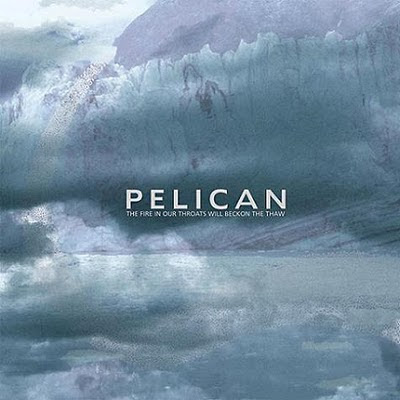
Pelican - The Fire in Our Throats Will Beckon the Thaw


It's hard to find much to relate to in metal music for me anymore.  It turns out that the problem is mostly the vocals.  They're usually screamed in a manner such that lyrics are rendered useless.  One might argue that the vocals are more of an artistic touch meant to convey a feeling or emotion. Well ok, this can be made to work I'll agree but it becomes hard to beleive that this sort of anger can be sustained, in the singer, much less(more importantly) in the minds of listeners over any period of time(teenagers and psychopaths excluded).  Screaming as an instrument does makes sense to me, very few bands though can pull this off.

Take the vocals away though and a few things happen.  The focus is taken off the screamer and instrumentation must carry the song along.  Without a vocalist the traditional song structures seem awkward and vestigial.  With the music of midwestern post-metal group Pelican this emphasis is given to the change of movements and the building of melodies, harmonies, and volume.  The songs swell and break almost organically.  

Unlike say jazz though the effect isn't entirely avant garde.  In the absence of lyrics to hold a theme or narrative, the songs retain a sort of cinematic quality.  Bands like Mogwai or Explosions in the Sky have used this to great effect in actually scoring popular films.  Yet without a proper narrative the compostions have to be interpreted though the scant few impressions given by song title, album title, and album art.

With Pelican's The Fire in Our Throats Will Beckon the Thaw the impressions are grand, naturalsitic, time spanning, and represent fantastic and unstoppable forces of nature.  With this in mind the album can play as various narratives.  To me, it's glaciers slowly carving out continents, it's great squids and white whales and mammals coming aground, it's the volcanic birth of islands and mountains.  Its great and powerful forces of nature playing out thier ruthless and unpeopled stories.  

Consider the difficulty of trying to express such a scope verbally, and you'll find that those who try often end up sounding over the top and goofy, where classical intrumentals have succeeded.  Much like the classics it's not just size of your orchestra, but the grace and complexity with  which you can use it.  Fire in our Throats is Pelican's most melodic and complex composition to date, every bit as nuanced as the albums of thier post-rock bretheren mentioned above.  

Nevermind those metal bands who strive for darkness of the industrial, the tribal, the fuedal, and the sacrelige, Pelican is capable of expressing the greatness and complexity of the natural and the primordial which is far more interesting.